

Dr. Prakash V Kotecha MD, MSc
Public Health & Nutrition Expert
pvkotecha@gmail.com
World Kidney Day Mission
World Kidney Day started in 2006 and has since then celebrated every second Thursday of March to raise awareness of the people. Every year, the campaign highlights a particular theme.
World Kidney Day aims to raise awareness of the importance of our kidneys to our overall health and to reduce the frequency and impact of kidney disease and its associated health problems worldwide.
Objectives of the World Kidney Day:
· Raise awareness about our “amazing kidneys” Highlight that diabetes and high blood pressure are key risk factors for Chronic Kidney Disease (CKD).
· Encourage systematic screening of all patients with diabetes and hypertension for CKD.
· Encourage preventive behaviours.
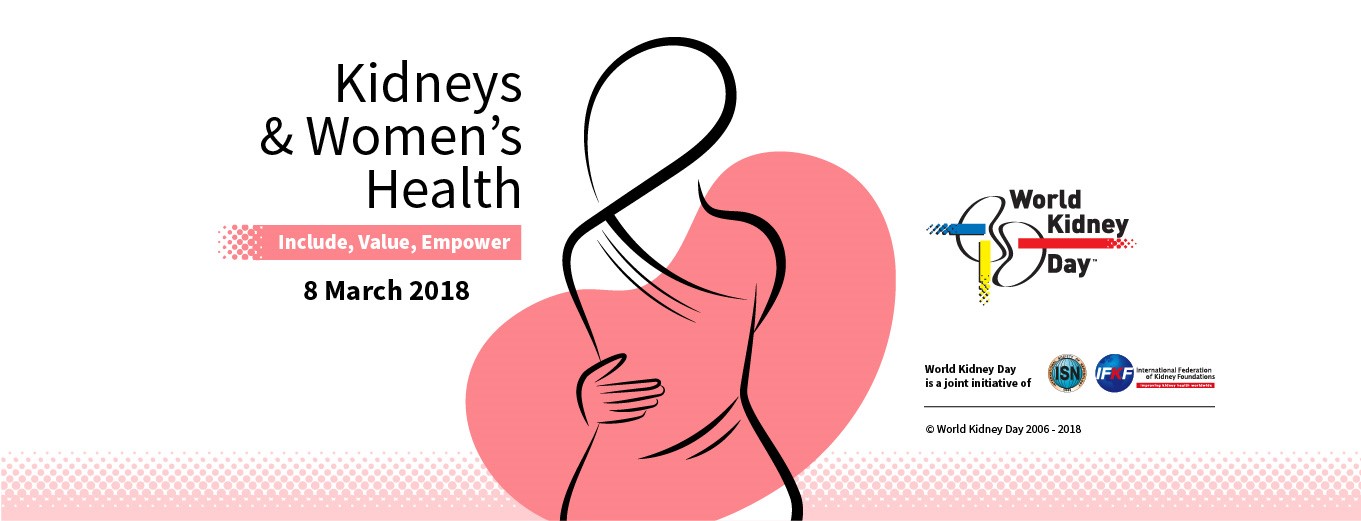
World Kidney Day and the International Women’s Day 2018 are incidentally commemorated on the same day, offering us the opportunity to reflect on the importance of women’s health and specifically their kidney health. On its 13th anniversary, World Kidney Day promotes affordable and equitable access to health education, healthcare and prevention for kidney diseases for all women and girls in the world.
Chronic kidney disease (CKD) is a worldwide public health problem with adverse outcomes of kidney failure and premature death. CKD affects approximately 195 million women worldwide and it is currently the 8th leading cause of death in women, with close to 600,000 deaths each year amounting to more than one woman death every minute.
The risk of developing CKD is at least as high in women as in men, and may even be higher. According to some studies, CKD is more likely to develop in women compared with men, with an average 14% prevalence in women and 12% in men. However, the number of women on dialysis is lower than the number of men. At least three major reasons are recognized so far: CKD progression is slower in women compared to men, psycho-socioeconomic barriers such as lower disease awareness lead to late or no start of dialysis among women and uneven access to care is a major issue in countries with less universal access to healthcare. Kidney transplantation is also unequally spread, mostly due to social, cultural and psychological aspects. Even in some countries that provide kidney transplantation and equitable treatment for men and women, women tend more often to donate kidneys and are less likely to receive them.
Kidney Infection
Some kidney diseases, kidney infection (acute or chronic pyelonephritis) typically affect women. Pyelonephritis is a potentially severe infection that involves one or both kidneys. Kidney infections (as most urinary tract infections) are more common in women and the risk increases in pregnancy. To ensure good results, as most renal diseases, diagnosis and treatment should be timely.
Kidney Disease & Pregnancy
CKD is also considered a risk factor for adverse pregnancy outcome and reduced fertility. Women who have CKD are at increased risk for negative outcomes for the mother and the baby; pregnancies in women with advanced CKD are most challenging with high rates of hypertensive disorders and preterm births. They may have reduced fertility but conception is possible, even if infrequent, on dialysis. On dialysis, results improve with intensive (daily or nearly daily) dialysis treatment, thus calling for dedicated programs for women of childbearing age.
In successfully transplanted women, fertility can be restored and chances of successful birth increase. However, as complications are observed more often than in the general population, preconception medical counseling should always be sought. There is a clear need for higher awareness on CKD in pregnancy, to timely identify CKD in pregnancy, and to follow-up women with CKD during and after pregnancy. In this respect, pregnancy may be also a valuable occasion for early diagnosis of CKD, thus allowing planning of therapeutic interventions.
The burden of those maternal complications is particularly high for women in developing countries, due to insufficient access to universal and timely prenatal care, to improper management of women with preeclampsia, and to lack of availability of dialysis for severe AKI.
In Arizona, we have National Kidney Foundation of Arizona where people can get help related to their kidney diseases. This is located at 360, E Coronado Rd, Phoenix, 85004 and the website is https://azkidney.org/