
Sometimes back I had an opportunity to stay with an Indian family settled in America for several decades whose American-born desi son was just married recently. The new bride, now the daughter-in-law of the family, was also an American-born desi child like her husband. Throughout my stay with the family, this otherwise very intelligent girl addressed her father-in-law as “Uncle Ji” and her mother-in-law as “Auntie Ji.” However, in the same breath, she would address her own parents as “Mom and Dad.”
After a while, this became somewhat unsettling to me given that the parents of girl like that of the boy were from India and had lived there for half of their lives prior to arriving in the U.S.A. We all know that daughters-in-law and sons-in-law in India, regardless of level of closeness with their parents-in-law address them as Mom and Dad at least outwardly. Not able to control myself, I finally asked her why she doesn’t address her in-laws as Mom or Dad, too, as she does her own parents?
She paused for a moment and then responded, “Uncle Ji! Most of the Indian children born in the West usually address other Indian adults as uncles or aunties simply out of a sign of respect, no matter the relationship and whether they know the person or not.” She further explained, “Please understand that the parents of my husband are not my parents. Therefore no girl in the Western culture would ever give same status to her in-laws that she would to her own parents. At least I am not calling my in-laws “folks” like most of the other Western born and raised children would address their in-laws. Furthermore, don’t sons-in-law from the Eastern culture try to treat their wives’ parents a somewhat less than their own parents in spite of what is superficially preached? And don’t they? Uncle Ji!”
According to the Eastern perspectives, calling close relatives as “Folks” the way it is done in the West instead of recognizing the real relationship certainly takes away the closeness. She was not at all bothered in addressing her father-in-law and mother-in-law at least “Uncle Ji” and “Auntie Ji,” especially after attaching “Ji” at the end as a sign of respect. Under the circumstances, it was preferable and the next best thing to “Mom and Dad” than simply labeling them as “Folks” But that is where my dilemma started for that exactly was my point.
Having imported myself to the West from a culture that expects and desires to impart almost equal respect and love to both sets of parents, I felt that same should have been the case here. Hearing them labeled “Folks,” or, for that matter, a generic “Uncle Ji or Auntie Ji” truly made me feel uncomfortable. Yet, I also understood that culture always exerts a dominant effect on our behavior. It is culture that determines and dictates the relationship and not the other way around.
Should this have truly mattered? I certainly do not have the answer to this question. However, the fact of the matter is that during our time here in the West, many facets of the Eastern lifestyle seem to be eroding right in front of our eyes, including this delicate distinction between relationships. This is bound to happen. Calling a father-in-law as an “Uncle Ji” vs. “Dad” or calling a mother-in-law “ as an Auntie Ji” as opposed to “Mom” may not mean much to some so long as due respect is given and care is kept in maintaining communication with them . But in my way of thinking, it does!
>Every little thing in a relationship induces a certain amount of closeness, and obviously the words “Dad and Mom” are closer and more loving than “Uncle Ji and Auntie Ji,” or worse still, mere “Folks.”
One may counter here that love, respect and closeness with one’s in-laws that is expressed through words about which I am harping here, indeed is a thing of the past and is primarily limited, if at all it exists, to countries like India. Here in the West, this may not be necessary. According to Western culture, there are far better ways to show respect, and love rather than focusing too much on how one’s elders are addressed. Many daughters-in-law or, for that matter, sons-in-law address their in-laws as “Folks,” yet their love for them and their closeness may be equal, if not more than what they have for their own parents. Calling them “Dad or Mom,” rather than “Uncle Ji or Auntie Ji,” is immaterial according to them, provided one carries a heart full of love and respect. “After all, what lies in a name? A rose is a rose after all.”
Not uncommonly, in my medical practice, I get the opportunity to watch American-born women bringing their elderly in-laws to my office or to the hospital with tender loving care and a great amount of respect. Pushing their wheelchairs and helping them get to where they need to go and then take the time to understand their care from the providers is not an unusual phenomenon. This can only happen if the prospective daughters-and sons-in-law consider their in-laws equal to their own parents and vice-versa, regardless of how they happen to address them.
The desi children of the West, on the other hand, try to butter their arguments by referring to several tragic stories of new brides in India whose in-laws along with their husbands tried to burn them for not bringing with them the expected dowry. Regardless of the superficial exhibition of an outpouring of love for their daughters-in-law and their concern for morality as well as the closeness through high level spiritual talks, this menace of dowry related deaths of daughters-in-law in India has been on exponential rise. It contradicts all that is said or shown outwardly. That is why desi daughters-in-law settled in the Western world would often consider a day-to-day practical interaction with in-laws to be more important than how they address their in-laws. “What is important is how we treat; rather, how we address someone.” This in fact turns out to be the common response from most of the diaspora youth members.
Addressing in-laws as equal to one’s own parents may bring an additional responsibility that in my opinion, the modern youth is unwilling to take upon its shoulder. Instead, addressing them as “Uncle Ji and Aunti Ji” relieves them of that burden in an easy and perhaps respectful way.
Indian children often state, that times and cultures have changed. To stay stuck in traditions of back home, like many among our generation happen to be, may not be a right strategy, at least in our children’s way of thinking. Whether right or wrong, it is a personal decision that ultimately rests with each individual of new generation. Yet, I hope and pray that equal respect and love is given by children to both sets of parents i.e. their in-laws and their own parents in verbally addressing them as well as through their actions and behavior.
Calling their in-laws as “Mom and Dad” certainly projects more closeness than addressing them as “Uncle Ji or Auntie Ji” could ever do, at least in the minds of the first generation parents of Western-born desi children. This closeness can certainly make their parents’ and in-laws’ transit from this world to the next somewhat smoother and peaceful, for they will have the satisfaction of feeling equally close to their daughter’s husband and son’s wife as they do to their own son and daughter at the time of their departure from this world. Furthermore, it doesn’t cause any extra effort or labor on the part of someone to address their in-laws in a way that makes their elders happy and gives them the feeling of being close to them. If calling one’s in-laws “Mom and Dad” instead of “Uncle Ji and Aunt Ji” makes a world of difference to the in-laws and their thought process, then why not simply do it?
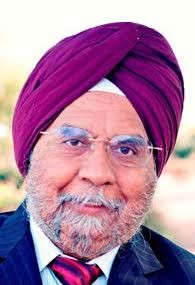
Author of latest book “Western Mirror, Eastern Reflections”